
Titan was the top gainer in the Sensex pack, climbing over 4 per cent, followed by Bajaj Auto, Maruti, Reliance Industries, ONGC and UltraTech Cement.

Mutual funds (MFs) are set to be net sellers of Indian equities for the first time in the past seven financial years, having sold stocks worth about Rs 1.27 trillion so far in 2020-21 (FY21), making it the highest net sales on record in a financial year. MFs had been net buyers in the previous six financial years, including purchases of over Rs 1.41 trillion in FY18, Rs 88,152 crore in FY19, and Rs 91,814 crore in FY20. The last time they offloaded Indian equities was in FY14, when they net sold stocks worth Rs 21,159 crore. In contrast, foreign portfolio investors (FPIs) have ramped up buying in FY21, purchasing more than Rs 2.6 trillion worth of shares.

Investors took the Yes Bank event negatively because it raises a question on the stability of the overall Indian financial system.
9 top-valued Sensex cos see Rs 93,000 crore m-cap erosion

They own 27.5% in top 75 listed firms; investments bounce back after falling two straight quarters

Tata Steel was the top gainer in the Sensex pack, rising 3.10 per cent, followed by Bajaj Finance, Bajaj Finserv, Reliance Industries, Asian Paints and Titan.

ICICI Bank was the top gainer in the Sensex pack, surging nearly 3 per cent, followed by HDFC, Axis Bank, Sun Pharma, NTPC and M&M. NSE Nifty surged 119.75 points to 15,812.35.

IndusInd Bank was the biggest loser in the Sensex pack, shedding nearly 2 per cent, followed by Bharti Airtel, Reliance Industries, HDFC twins, SBI, HUL, Tata Motors, Nestle India and Axis Bank. On the other hand, Asian Paints, Tata Steel, Titan and L&T were among the gainers, rising up to 3.03 per cent.

If the index is unable to sustain above 24,500 levels, technically it can then slip to its 200-DMA placed at 23,365 levels.
Equity benchmark indices Sensex and Nifty buckled under selling pressure after a nine-session rally on Monday, as massive sell-off in IT, tech and telecom counters unnerved investors.

Ajit Mishra, vice president, Research, Religare Broking, answers your queries.

The Nifty50 slipped 33 points to close the session at 8,509 after hitting an intra-day high of 8,587.
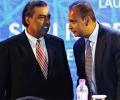
Anil Ambani's Reliance Power tops the table with 3.46 million shareholders

Participants are keenly waiting for the January IIP.

Reliance improved its ranking this year to 121 from 142 last year, with a market value of $50.6 billion and assets worth $91.5 billion.

However, in the last few sessions, the stock of Mukesh Ambani-controlled Reliance Industries Limited (RIL), hit its 52-week low level of Rs 2269.75, and has been one of the worst performers among the Sensex pack thus far in calendar year 2023 (CY23). Thus far in CY23, RIL has tanked nearly 11 per cent as compared to a fall of around 5 per cent in the S&P BSE Sensex. The fall in the stock, according to Gaurang Shah, senior vice-president at Geojit Financial Services is mostly due to the overall dip in the market sentiment, which in turn has impacted large-caps, including RIL.

Among Sensex shares, HDFC Bank fell the most by 2.58 per cent, followed by SBI (2.12 per cent), HDFC (2.09 per cent), and IndusInd Bank (2.02 per cent). Axis Bank, Bajaj Finserv, M&M, L&T, Reliance, Infosys and TCS were among the major losers. In contrast, Tata Motors, Maruti, NTPC, Sun Pharma, Power Grid and Titan were among the gainers.

Other gainers included Kotak Bank, HCL Tech, ONGC, Asian Paints, Vedanta, HDFC Bank, Bajaj Finance, Maruti and TCS, gaining up to 1.41 per cent. Sun Pharma was the top loser, cracking 8.58 per cent.

The broader NSE Nifty, on the other hand, ended 2.70 points, or 0.02 per cent, lower at 11,555.90 in its third straight day of losses.

Ajit Mishra, vice president, research, Religare Broking, answers your queries.

Tech Mahindra was the top loser in the Sensex pack, shedding 2.51 per cent, followed by Bajaj Auto, RIL, Hero MotoCorp, IndusInd Bank, Mahindra and Mahindra, HDFC and TCS.

In the 30-share Sensex constituents, 16 ended lower and 14 gained, helping the benchmark indices trim losses.
From the Sensex pack, ICICI Bank, Bharti Airtel, HDFC, ITC, Nestle, Larsen & Toubro, Asian Paints, Mahindra & Mahindra, Power Grid and IndusInd Bank were the major laggards on Friday. In contrast, Bajaj Finserv, Titan, Bajaj Finance, Tata Steel, Tata Motors, Wipro, Kotak Mahindra Bank, Tech Mahindra, Reliance Industries and State Bank of India were the major winners.

ICICI Bank was the top loser in the Sensex pack, shedding nearly 2 per cent, followed by UltraTech Cement, Asian Paints, ITC, Kotak Bank, Axis Bank and PowerGrid.
Shares of RIL on Monday opened at Rs 1,206.50, then gained further ground and touched its 52-week high level of Rs 1,238.05, up 2.87 per cent over its previous closing price.

Equity benchmark Sensex slumped 400 points on Wednesday tracking losses in index majors HDFC twins, Kotak Bank and TCS amid a weak trend in global markets.

Actively-managed large-cap mutual fund (MF) schemes have managed to regain some lost sheen this year after faring poorly in the 2022 calendar year (CY22). At the end of the first six months (H1) of CY23, 78 per cent of the active large-cap schemes were ahead of the Nifty50 index funds as against just 26 per cent in 2022. When compared to the Sensex index funds, 61 per cent active funds have delivered better returns, shows an analysis of Value Research data.

Even as the slowdown in the information technology (IT) services sector deepens, banking, financial services and insurance (BFSI), as well as oil and gas companies, emerge as the primary drivers of corporate earnings in the country. The IT services sector's share in corporate earnings declined to a five-year low of 17.4 per cent in the second quarter (Q2) of 2023-24 (FY24), whereas banks and finance companies accounted for 46.5 per cent, and oil and gas firms contributed 16.8 per cent. At their peak, IT services firms like Tata Consultancy Services (TCS), Infosys, HCLTech, and Wipro represented just over a third of the combined net profit of all listed companies in the Business Standard sample.
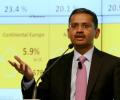
Shares of TCS rose by 2.48 per cent to end the day at Rs 3,195.10 on the BSE, while RIL shares fell by 0.08 per cent to Rs 963.80.

M&M was the top gainer in the Sensex pack, rallying nearly 6 per cent, followed by Bajaj Auto, Titan, Bajaj Finance, HDFC Bank and PowerGrid.
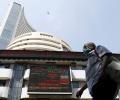
ITC was the top loser in the Sensex pack, shedding nearly 3 per cent, followed by Tech Mahindra, Axis Bank, Asian Paints, TCS, HCL Tech, HDFC and Kotak Bank.
To be fair, one year is too short a period to judge the schemes' performance.

The total value of India's top 100 brands has increased by 2 per cent, from $162.1 billion in 2020 to $164.9 billion in 2021, according to the latest Brand Finance India 100 2021 report. This uplift in brand value over the course of the first year of the pandemic is an impressive feat given the global economic crisis following the implementation of national lockdowns in March 2020, when business activity was brought to a halt, affecting both production and consumption. Among the brands that came on the top of the list include Tata Group, Reliance Industries, and Mahindra Group.

Equity mutual funds (MFs) deployed maximum in shares of Reliance Industries (RIL) in June at Rs 2,177 crore, followed by Maruti Suzuki (Rs 2,045 crore) and Bharti Airtel (Rs 1,310 crore). Shares of both RIL and Bharti Airtel have been turbulent this month. On July 1, shares of RIL crashed over 7 per cent, following the government imposing windfall taxes on domestic crude oil production and fuel exports.

Ajit Mishra, vice president, Research, Religare Broking, answers your queries.

Total of 11 private Indian firms have made it to the list of 500 most valuable companies across the world, and the country is ranked 10th on the chart, as per a report. The total value of these 11 companies grew 14 per cent and has been pegged at $805 billion or nearly a third of the Indian GDP. All these companies in the list of non-state enterprises have gained in value during 2020, which was hit by the pandemic, barring tobacco major ITC and second largest private sector lender ICICI Bank, as per the 'Hurun Global 500' report.

IndusInd Bank was the top loser in the Sensex pack, shedding over 3 per cent, followed by Tata Steel, Bajaj Auto, HCL Tech, Sun Pharma and Tech Mahindra. On the other hand, HDFC twins and Bajaj Finance were the gainers.

Reliance Industries Ltd (RIL) was the star performer in Friday's session, spurting over 6 per cent to its all-time high, Other Sensex gainers included Bajaj Finance, PowerGrid, ICICI Bank, Maruti, Axis Bank and SBI. On the other hand, IndusInd Bank, HCL Tech, ITC, M&M HDFC and Infosys shed up to 2.94 per cent.

Brokerages expect Nifty50 companies to have cumulatively witnessed strong double-digit growth in their earnings in the first quarter of FY24 (Q1FY24). This growth in the combined earnings is expected to have been driven by banks, automakers, and oil & gas companies. Other sectors may report muted profit growth.

Bajaj Finance was the top laggard in the Sensex pack, dropping over 9 per cent, followed by Axis Bank, IndusInd Bank, HDFC, ICICI Bank and M&M. Reliance Industries, however, capped the losses by rallying over 3 per cent. Sun Pharma, Hero MotoCorp, L&T, PowerGrid and Bajaj Auto were also among the gainers.
